
In Q3 2025, the labor market remains tight, and costs are still climbing. Skilled workers are in short supply, and construction wages continue to outpace national averages. For high-end residential builders in the $1 to $5 million revenue range, deciding how to structure your workforce is more important than ever.
Choosing the right mix of employees and subcontractors is not just a compliance issue. It directly affects schedule control, project quality, and long‑term profitability. This guide breaks down the differences, trade‑offs, and best practices for getting it right.
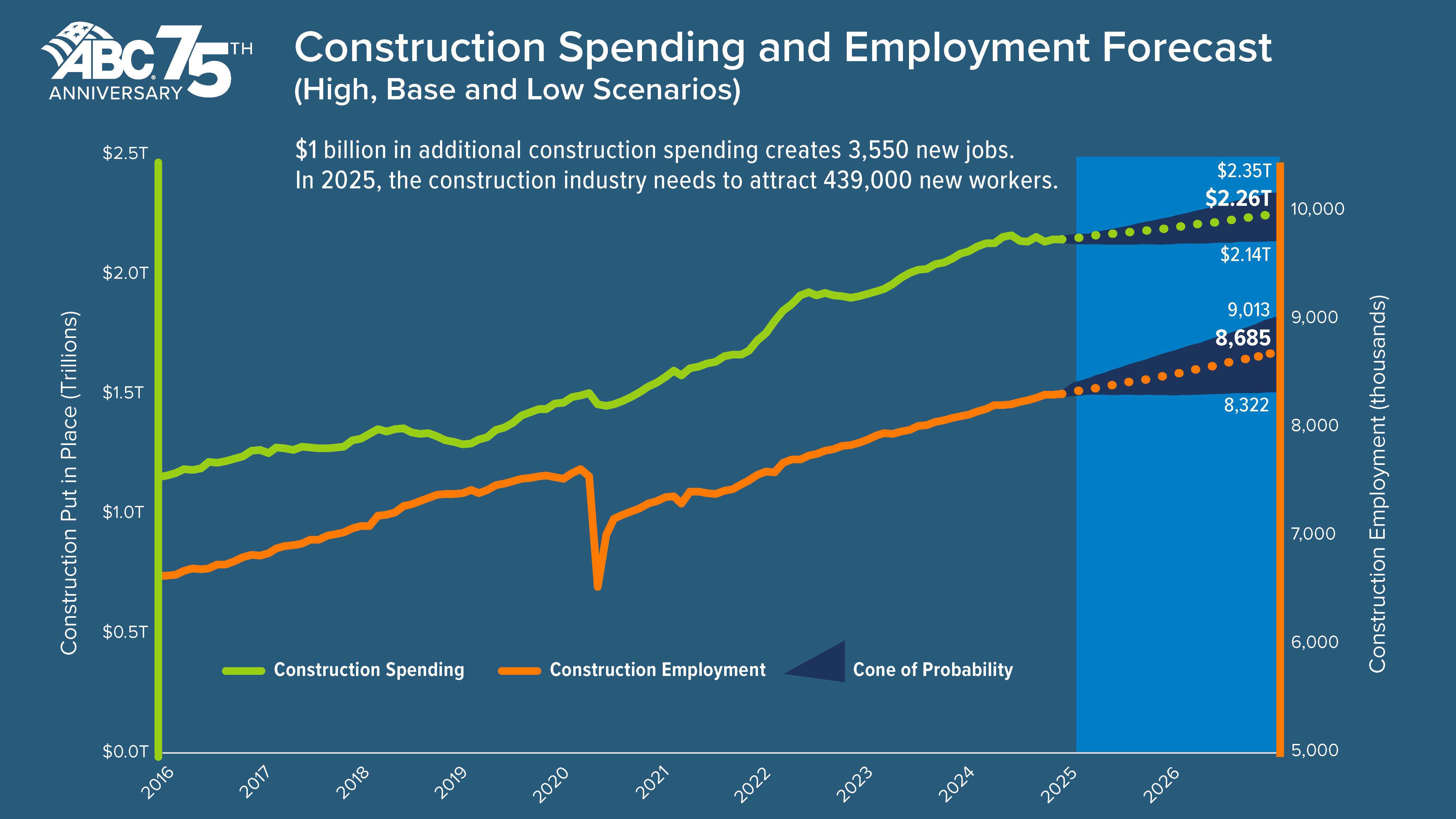
Figure: Projected U.S. construction spending (green) vs. construction employment (orange) through 2026. In 2025 the industry needs an estimated 439,000 new workers to meet demand, underscoring a persistent labor shortage abc.org. Small builders must strategically balance employees and subcontractors to meet project needs despite this talent gap.
📈 What’s Changing in 2025: A Quick Overview
- Wages are rising. Construction pay is about 19 percent higher than the national average.
- Skilled labor remains scarce. Builders still struggle to fill key roles.
- Compliance rules are tightening. Misclassifying workers is riskier than ever, especially with the return of the broader “economic reality” test under federal review.
- Overhead pressure is real. Labor costs, both salaried and subcontracted, are going up.
Smart builders are adapting with hybrid strategies. Let’s look at how.
🔵 BPA Tool: Forecast Labor Costs by Project Type
Use the BPA to understand how labor expenses affect profitability across different job scopes so you can plan more strategically.
👉 Access Your BPA →
Employees vs. Subcontractors: Pros, Cons, and Key Differences
🛠️ 1. Control and Consistency
- Employees give you direct oversight, cultural alignment, and process consistency. They’re easier to train and build loyalty over time.
- Subcontractors offer flexibility and specialization. You get niche skills on demand but have less daily control.
Best for high‑end builders: Use employees for detail work, client‑facing tasks, and quality‑sensitive processes. Deploy subs for trades like plumbing, HVAC, or surge capacity when projects spike.
💰 2. Cost and Overhead Management
- Employees require payroll taxes, insurance, and benefits. However, they build in‑house expertise and carry your brand values forward.
- Subcontractors are project‑based and cost‑effective short term. They reduce fixed expenses but can be more expensive during peak demand.
2025 insight: Most builders raised wages by 4–5 percent in 2024. That trend is continuing, so you need to budget for labor rate inflation across the board.
⚖️ 3. Legal and Compliance Risks
- Employees are W‑2 staff and subject to employment laws.
- Subcontractors are 1099 contractors, but they must operate independently to qualify.
With labor laws evolving, misclassification can lead to back wages, audits, or penalties. To stay compliant:
- Use written contracts
- Document subcontractor autonomy
- Avoid treating subs like employees
Tip: If you provide equipment, set schedules, and manage their tasks directly, the government may view that person as an employee.
Building a Balanced Workforce: The Hybrid Approach
🔧 Why the Best Builders Use Both
Combining a core employee team with a network of trusted subcontractors allows high‑end builders to stay agile, control quality, and reduce risk.
Example setup:
- Keep employees for project management, framing, and finishes
- Subcontract concrete, MEP systems, roofing, or seasonal work
This approach ensures consistent standards while scaling your labor force based on workload.
🔵 BPA Tool: Build a Hybrid Workforce Plan
The BPA maps your labor model by division and helps identify where to scale with subs vs. employees.
👉 Access Your BPA →
🗺️ How to Make It Work
- Define who does what.
Clarify which roles are permanent and which are project‑based. This eliminates confusion and builds trust between employees and subs. - Create strong onboarding for both groups.
Use employee handbooks and training for internal staff. Use detailed scope documents, timelines, and expectations for subcontractors. - Foster a team culture.
Treat subs as partners. Communicate clearly. Pay them on time. When you invest in relationships, they prioritize your projects. - Adjust as you grow.
If you notice your workload increasing, consider converting a reliable sub to an employee. If you need to cut overhead, re‑evaluate what can be contracted out.
Managing Your Workforce Effectively
📝 1. Set Expectations Early
- For employees, provide clear job descriptions and onboarding.
- For subs, use detailed contracts and define deliverables.
Clarity prevents delays and miscommunication.
🎯 2. Tailor Your Leadership Style
Employees may need more development and feedback. Subcontractors often expect autonomy. Adapt your management style to the person and the role.
🤝 3. Build Respect Across the Team
Whether someone is on payroll or contract, treat them as a valuable contributor. That culture boosts morale and productivity across your entire operation.
Bonus Tip: Reliable payment is one of the top reasons quality subcontractors stay loyal. Paying early (or just on time) gives your company a serious advantage in today’s competitive labor market.
🟦 Your Workforce Strategy Is a Profit Lever — Use the BPA to Dial It In
In 2025, the labor market won’t cut you any slack — but a custom Business Plan of Actions (BPA) will. The BPA is a builder-specific blueprint designed to help you:
- Balance internal labor and subcontractors for scalability
- Reduce risk through clean systems and defined responsibilities
- Improve leadership and onboarding practices for both groups
- Forecast labor impact on margin across job types
🔵 BPA Tool: Align Your Workforce With Your Profit Goals
Get a custom plan to structure your team, protect your timeline, and grow without unnecessary overhead.
👉 Access Your BPA →
If you’re navigating labor shortages, rising wages, or unclear subcontractor relationships, the BPA will provide the clarity and structure to move forward confidently.
Build the team you need — and the systems to back it up. Start with your custom BPA today.