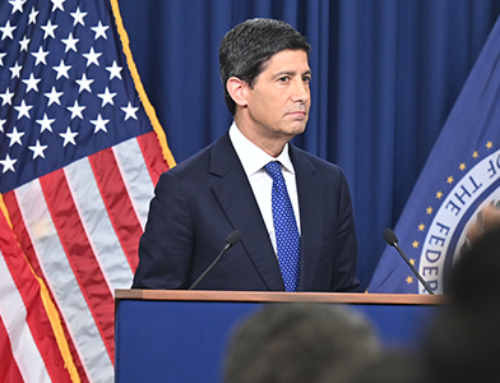
A Fed chair change can shift the Fed’s tone and messaging, but it does not automatically drop 30-year mortgage rates.
Your sales pipeline still lives and dies on affordability, which is driven mostly by long-term rates (especially the 10-year Treasury and mortgage spreads), not just the Fed’s overnight rate.
Access your BPA →
Executive Summary
- Headline impact: A Fed chair change can move expectations, but it does not guarantee mortgage-rate relief.
- Planning reality: Your pipeline still hinges on affordability, which is priced off long-term yields and mortgage spreads.
- Execution takeaway: Treat this as a sentiment and volatility event. Tighten your pricing, incentives, and cycle-time playbook.
- Best posture: Be ready for a “steering feel” change, not a mortgage-rate coupon.
What Just Happened, and What’s Still Undecided
President Donald Trump has nominated Kevin Warsh to succeed Jerome Powell as Chair of the Federal Reserve
when Powell’s chair term ends in mid-May.
- Nomination is not installation. The chair role requires a Senate confirmation process, and the timeline can get contentious.
- The Fed is not currently loose. At its late-January meeting, the Fed held the target range at 3.50% to 3.75%,
with a 10–2 vote (two dissenters preferred a quarter-point cut).
Treat this as a headline that can move expectations, not a guaranteed mortgage-rate drop.
How the Fed Chair Role Actually Works
A lot of builder frustration comes from the belief that “the Fed chair sets mortgage rates.” That’s not how it functions.
The policy rate is set by the Federal Open Market Committee, which has 12 voting members.
The chair leads the committee, but decisions are made by vote.
- Agenda and coalition-building inside the committee
- Communication and forward guidance (expectations can move long-term rates)
- Unilaterally force immediate cuts without persuading other voters
A new chair can change the steering feel, not hand you a mortgage-rate coupon.
Warsh’s Past Signals, Translated for Builders
You do not need to be a macro trader here. You just need a working sense of what he tends to prioritize.
Warsh has been publicly associated with three themes:
- Tighter focus on core mission (price stability and employment), with criticism of mission drift
- Skepticism of post-crisis tools like large-scale asset purchases and a permanently expanded balance sheet
- Preference for clearer frameworks and “rule-of-thumb” benchmarks, including discussion of the Taylor rule
Markets and commentators have debated whether Warsh might favor faster cuts while also supporting balance-sheet shrinkage.
Those can pull long-term borrowing costs in opposite directions. Faster cuts can help payments at the margin, and tighter
balance-sheet policy can keep long-term rates, and mortgage rates, stubbornly high.
What Actually Hits Your Sales Office
Here’s the chain that matters for backlog, cancellations, and closings:
- The Fed controls the overnight price of money
- Mortgage rates are priced off long-term yields plus mortgage spreads
- So the Fed can cut, and mortgages can still stall or rise if inflation expectations or term premiums move up
Access your BPA →
The Affordability Math Is the Business Model
National Association of Home Builders research consistently shows what you already see in the field: small rate moves change who qualifies.
- NAHB priced-out analysis indicates modest mortgage-rate declines can bring millions of households back into qualification ranges.
- NAHB has also stated that a 25-basis-point decline (example: 6.25% to 6.00%) can bring roughly 1.1 million additional households back into the buyer pool.
- As of late January, Freddie Mac reported the average 30-year fixed rate around 6.10% in its weekly survey.
Even “small” rate changes can meaningfully widen or shrink your buyer funnel.
What Sentiment Says Right Now
The NAHB/Wells Fargo Housing Market Index for January is in the high 30s, with weak buyer traffic and heavy reliance on incentives and price reductions.
- 40% of builders cut prices (average cut 6%)
- 65% used sales incentives
A Wildcard to Watch
Separately from the chair story, reporting indicates the administration has explored measures aimed at lowering mortgage rates through mortgage-backed securities activity routed via housing finance channels.
This reinforces the main point: the Fed has the most direct control over short-term rates, while long-term borrowing costs are still driven by broader market forces.
Scenario Planning Grid for the Next 12 Months
| Scenario | What it looks like | Triggers to watch | What it usually means for you |
|---|---|---|---|
| Orderly transition, modest easing | Warsh confirmed on time, limited cuts later in 2026 as inflation eases, mortgage rates stabilize around low 6% | Smooth confirmation, steady Fed language, calm markets | Gradual improvement in traffic and absorptions |
| Hold-at-neutral, Fed divided | Policy rate stays near 3.50% to 3.75% while officials debate whether policy is already neutral | Ongoing dissents, mixed messaging, inflation data surprises | Incentives stay elevated, buyers remain payment-sensitive |
| Volatility, independence premium | Political conflict raises term premiums even if cuts arrive | Confirmation delays, Senate conflict headlines, credibility fights | Mortgage rates stay sticky, cash discipline and cycle-time control win |
Builder Playbook: Practical Moves Now
- Rebuild pricing around monthly payment, not sticker price
- Get explicit with lenders on buydown economics versus price cuts
- Stress-test spec exposure assuming mid-6% mortgage rates persist
- Govern incentives with rules (caps, triggers, expiration dates), not emotion
- Tighten cycle time (starts discipline, faster punch, fewer surprises) because volatility punishes slow inventory
- 10-year Treasury yield (direction matters more than commentary)
- Weekly mortgage rate prints
- Local traffic, cancellations, close rate, incentive cost per sale
- Any meaningful split or dissent signals inside the FOMC
Headlines can shift sentiment, but execution wins. Plan for payment-driven buyers, control incentives with guardrails,
and run a faster operating cadence so you can capture demand if long-term rates cooperate, without betting the business on optimism.